Green Infrastructure Guidance for Industry for Onsite Stormwater Retention
Sydney Water
It is recognised there is a need to protect waterways from the increased stormwater volumes discharged from urban areas via the drainage system. This will require efforts at the lot scale using a range of onsite green infrastructure assets, in streetscapes as well as larger precinct or regional efforts such as stormwater harvesting where these are possible. Onsite green infrastructure assets retain stormwater and reduce the volumes discharged through the drainage system. These may have benefits both for waterway protection and flood mitigation.
There is a need for a clear evidence base to help industry better understand what the performance of these green infrastructure assets is and what key design factors and variables drive performance. This will then support greater adoption and better design. This project set out to build such an evidence base. The first stage was a literature review that collated field monitoring and meta-studies from around the world and volume retention outcomes from numerous assets. Initially five different green infrastructure assets were considered. Taking into consideration the data available, focus was placed on biofilters and green roofs as these have the richest data sets that can be used to analyse how different factors influence performance and calibrate models.
The second stage of the project was to statistically analyse the data to better understand the mechanisms, pathways, design factors and variables that influence performance. This provides insights to improve existing modelling practices or develop better models to predict the performance of assets during design. The guidelines use two measures of runoff volumes from impervious surfaces 1. The Mean Annual Runoff Volume (MARV) and 2. Flood Event Runoff Volume (FERV). A percentage of these must be retained on site by appropriately designed and sized stormwater treatment systems. The guideline describes a methodology for the retention and detention of rainfall runoff from impervious surfaces. Tools for the design of retention and detention assets to achieve stormwater volume reduction objectives were produced to support industry uptake of green infrastructure.
The outcomes of the project include:
- A collated summary of stormwater volume reduction (hydrologic) performance of green infrastructure assets. While other meta-studies exist for specific assets, this alone is a valuable addition to the existing evidence base.
- A collated set of detailed hydrologic data sets that can be used to assess the influence of a range of factors and variables on asset performance and support model calibration
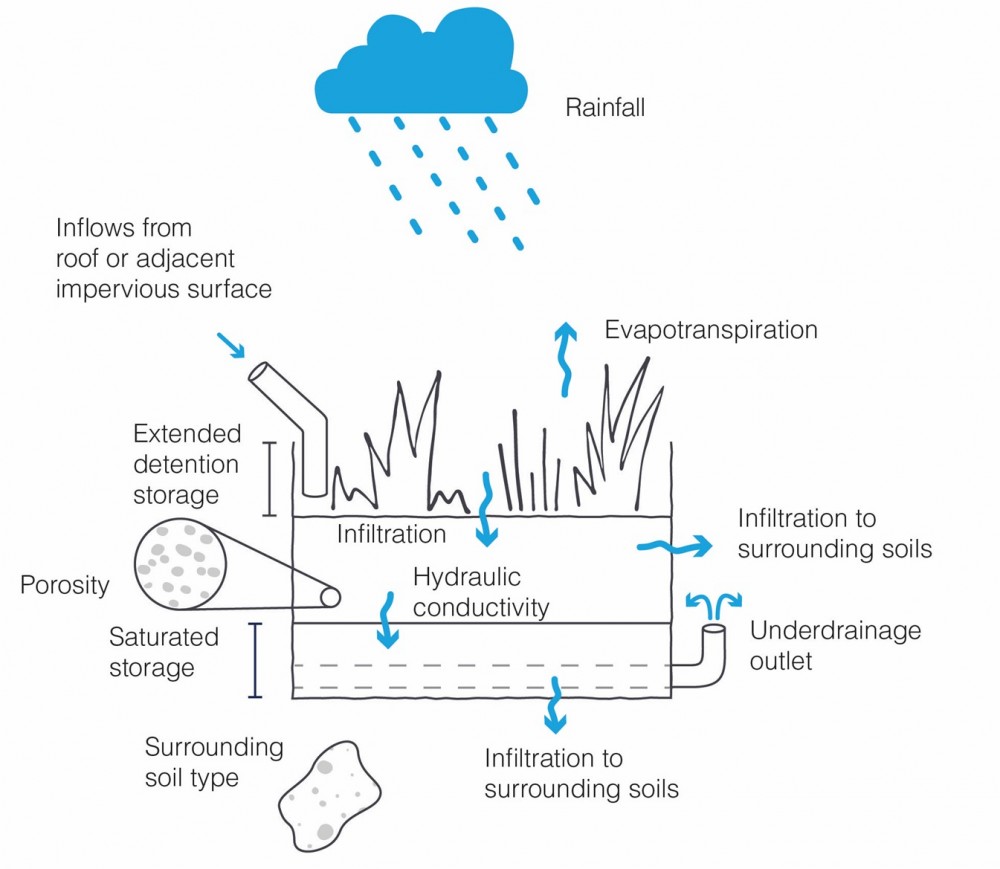
- A summary of the main pathways for water retention within green infrastructure assets drawing on the literature
- Conference paper presented at the International Conference on Urban Drainage in Melbourne, October 2021